
In Short
- First, call about the leak or backup, close the main water valve if safe, and stay away from wet outlets and cords.
- If you smell gas, leave the house and call the gas utility from outside.
- Next, your technician inspects the problem, explains the scope and price before work starts, and provides repair records afterwards.
First Steps During a Plumbing Emergency
Keep a safe distance and call
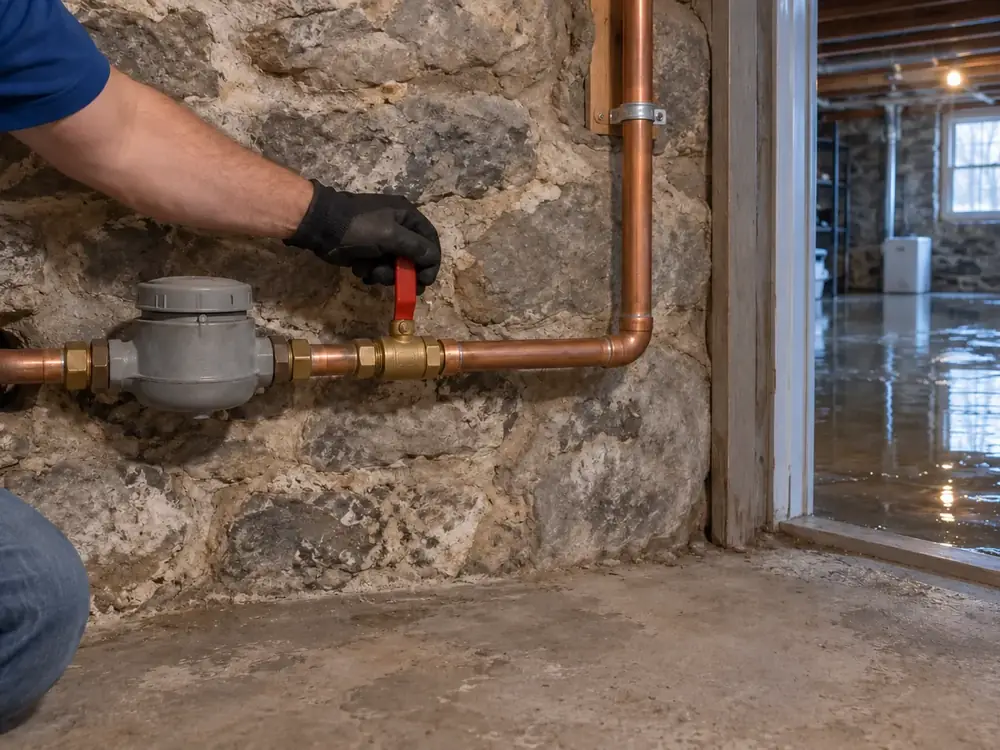
Call now about water escaping a pipe, a fixture overflowing or sewage coming indoors. Close the main water valve if reaching it is safe, and keep everyone away from outlets, cords and electrical equipment near water. Do not cross a wet area to reach a valve.
A gas smell changes the first step: leave the house and call the gas utility from outside. Leave gas lines, gas valves and water heater controls alone. The plumbing call follows from a safe place.
Where the main water shut-off is
The main water shut-off is generally inside where the water service enters the building; Aquarion's household diagram places the house valve there, normally before the meter. A basement or utility area is a general place to look, provided access is dry and safe.
If you do not know where the valve is, say so during the call. Finding it is not a condition of asking for help. Keep the conversation focused on what you see rather than opening walls or attempting a pipe repair.
What the person answering asks
The call starts with your address, the affected fixture or pipe, and when the trouble began. Next, explain whether water is still flowing, whether the main valve is closed and whether more than one drain is backing up.
Describe a stain, puddle or loss of flow in ordinary words. You do not need to identify a pipe material or diagnose the fault. Say which room is affected and whether the route to it is safe. For active leaking or a backup, the emergency plumbing page describes the service.
What needs attention tonight
Active flooding, sewage coming into living space and water reaching electrical equipment need attention now. A small, contained drip or a slow drain without an overflow may suit a routine appointment, but call to describe the situation rather than deciding from the fixture's name alone.
During the conversation, mention whether the puddle is growing, whether the affected fixture is usable and whether another bathroom is working. A loss of hot water without leaking is different from a tank surrounded by spreading water. Those details shape the next steps.
What happens at the visit
Your technician first looks at the affected plumbing and checks where the water or blockage originates. Next, they explain the repair area, access needs, parts and price before any work starts. An inaccessible pipe or several affected fixtures changes the scope.
Then the agreed repair proceeds, followed by a check of the repaired plumbing. Keep the written description so you know which section or fixture received work.
What to keep for your records
Photograph visible water, the affected room and damaged belongings only from a safe, dry position. Taking pictures must not delay leaving a hazardous area or making the call.
After the repair, keep dated photos, the written scope, the description of the completed work and receipts together. For documentation for insurance, those records show what you observed and what the repair involved.