
In Short
- A tank stores heated water, while a tankless unit heats flowing water and must meet the household's demand at one time.
- During the visit, your technician compares space, fuel, supporting systems and upkeep before explaining the chosen scope and price ahead of work.
- After installation and testing, keep the equipment details, maintenance instructions, written description and receipts.
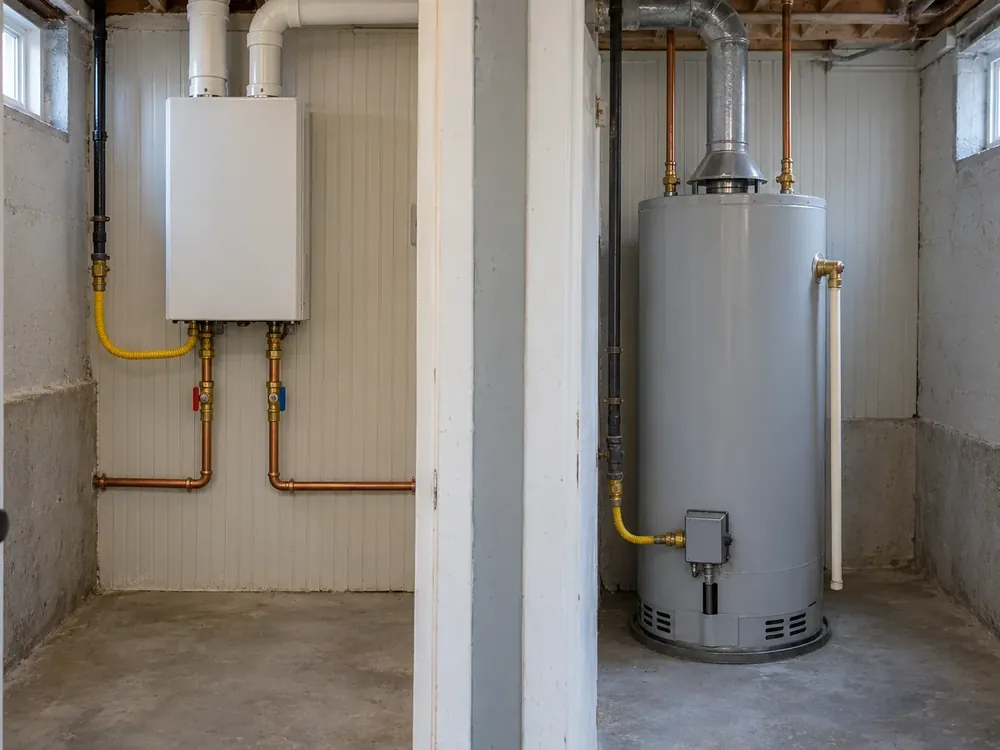
Choosing Between Tank and Tankless Water Heaters
A tank suits a home when its stored supply and recovery meet demand; tankless suits a home when its flow capacity and installation requirements fit. Call to discuss an unreliable heater or a planned replacement in Hampton. First, the person on the line asks where the unit is, when trouble started and whether the water is off. Share which showers and appliances run together, then your technician evaluates the setup during the visit.
Compare how hot water reaches the fixtures
A storage heater holds heated water for use, while a tankless heater heats water as it flows through the unit. A tank needs time to recover after heavy use. Tankless operation avoids emptying a stored supply, but simultaneous demand still has to stay within the unit's output. Your technician uses household demand to compare suitable equipment.
Tankless water heater pros and cons include less floor space and ongoing hot water production, balanced against installation changes and model-specific upkeep. The comparison below organizes the questions discussed on the visit.
| Question | Tank | Tankless |
|---|---|---|
| How does it supply hot water? | Holds a heated supply and reheats incoming water. | Heats water flowing through the unit. |
| What limits supply during heavy use? | Stored capacity and recovery performance. | Output at the required temperature rise. |
| What space does it need? | Room for the tank and service access. | Often wall space, with required clearances and service access. |
| What determines fuel and venting needs? | Selected model and existing connections. | Selected model and capacity of supporting systems. |
| What upkeep matters? | The model's prescribed tank and component maintenance. | The model's prescribed checks and scale management. |
Match the equipment to the house
The right fit depends on the house's demand, usable space and existing hot water system. For a small Seacoast cottage, compare actual use and available installation space rather than choosing by floor area alone. In a larger family home, discuss overlapping showers, laundry and dishwashing so your technician assesses peak demand.
For a home with a boiler, explain whether the boiler also supplies domestic hot water. Your technician considers that connection when comparing a separate heater with the existing arrangement. Those examples describe possible homes; the visit establishes your property's setup.
Is a tankless water heater better for limited space? A compact unit often frees floor space, but the proposed location still needs suitable connections and access for service. Is a tankless water heater better than a tank for a busy household? The answer depends on the output required when several fixtures run together.
Consider fuel and installation changes
Fuel and existing infrastructure determine which installation changes accompany either option. Your technician examines water connections and combustion venting where applicable, and identifies supporting electrical work when needed. A change of equipment type may involve more than exchanging the heater.
For the plumber vs electrician question, ask which parts of the proposed job involve plumbing and which involve electrical work. The written scope should identify both when the project requires them. You make the equipment decision with your plumber after the inspection, with the scope and price explained before installation starts.
Include upkeep and expected service life
Both designs need the maintenance specified for the model and water conditions. Your technician explains the service requirements when discussing choices. Keep those instructions with the installation records so future maintenance follows the selected equipment's needs.
The Department of Energy's Energy Saver guide says tankless heaters can last more than twenty years, while most tank heaters last ten to fifteen years. Treat those figures as planning context: condition, maintenance and water quality affect an individual unit's service life.
Compare the full cost and finish the visit
Comparing tankless water heater cost vs tank means considering installation changes, energy use and future maintenance together. Does a tankless water heater save money? Reduced standby heat loss may lower energy use, but the overall result depends on usage, fuel costs and the work required to install it.
Your technician reviews those factors and the proposed tasks before you approve the installation. After the selected heater is installed, operation is checked and the upkeep instructions are reviewed. Keep the written work description and receipts. For the next step, call about tankless installation or tank replacement.