From Your Call to the Finished Repair
First, describe the problem on the call
Call now and start with whatever you know about the plumbing problem. The person answering asks what is leaking or blocked, where you notice it, when it started, and whether the water is off. You don't need a diagnosis or measurements. Share observations as you talk; the questions help put the problem into words.
Calls are answered at night and on weekends, too. A dripping ceiling, an overflowing toilet, and a cold shower each need a different conversation. Say whether water is still spreading or several fixtures are affected. Those details help explain what needs attention without asking you to open anything or test the plumbing yourself.
Next, arrange the visit
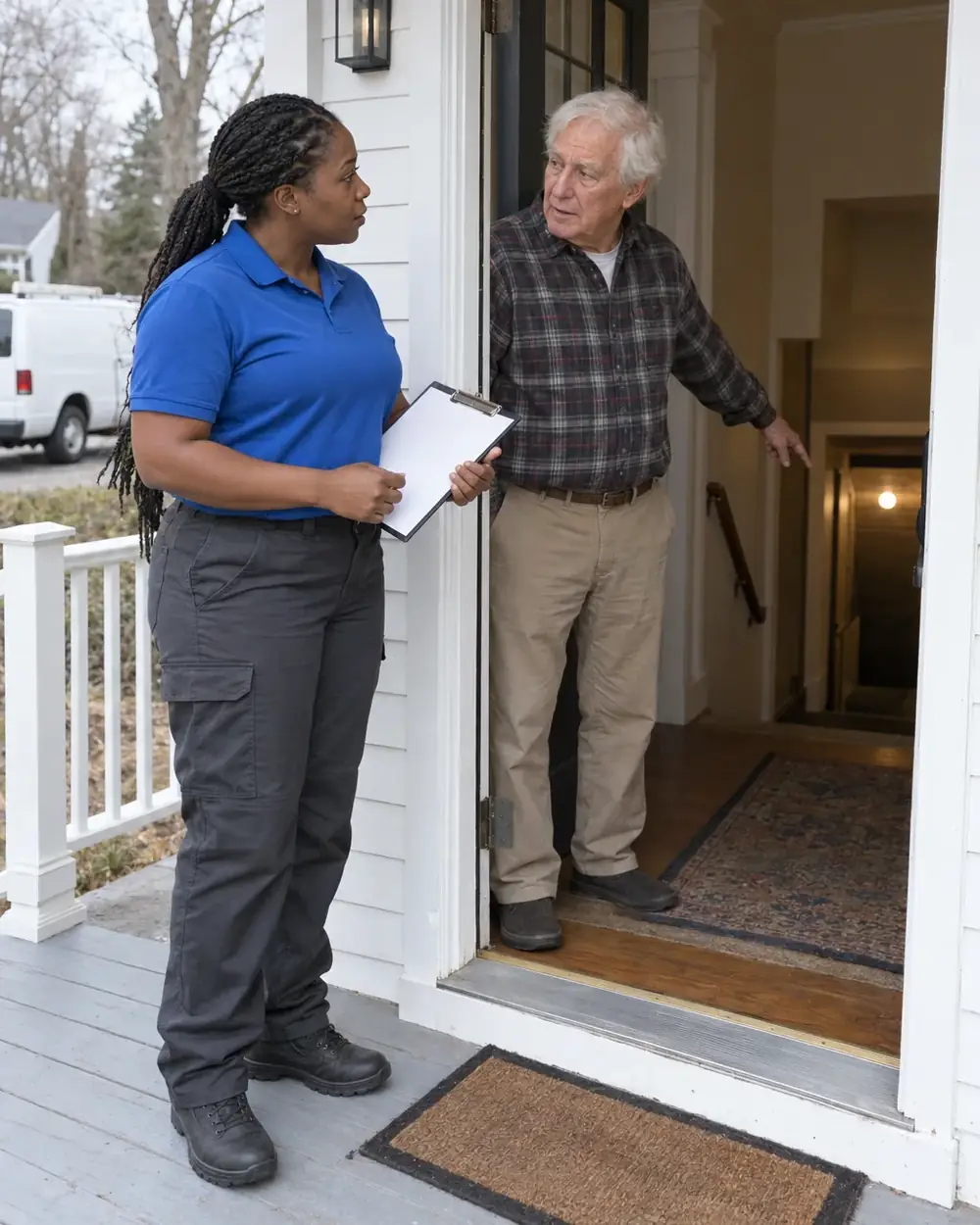
One of the plumbing providers in our network takes the next step and sets the visit with you. The conversation covers the location of the problem, your address, and access to the house. Mention a locked basement door or a fixture in a tight cabinet during the discussion.
Keep the safety steps simple while you wait. Close the main water valve if doing so is safe, and stay away from outlets or cords near water. If you smell gas, leave the house and call the gas utility from outside. Keep the discussion of repairs for your technician.
Then, your technician looks at the plumbing
Your technician examines the affected fixture or pipe and asks about the symptoms you described. A stain points to where water appears, but the leak may start elsewhere. A recurring blockage needs a closer look than a single slow sink. Explain whether the problem changes when another fixture runs.
The inspection establishes what needs repair and how to reach it. Your technician explains the findings in ordinary words, including whether access involves a cabinet, wall, or floor. Ask which plumbing parts are affected and what the proposed work addresses.
Review the scope and price
Your technician lays out the repair and its price before any work begins. The discussion separates the plumbing work from any additional work needed to reach or restore the area. Access, replacement parts, the condition of nearby piping, and the extent of the fault affect the scope.
Ask what is included and what remains outside the proposed repair. For a water heater, the conversation may compare a repair with replacement. For a drain, it may distinguish clearing a blockage from repairing damaged piping. You have the explanation before deciding how to proceed.
After that, the repair is completed
Your technician performs the agreed work and checks the repaired plumbing. The check follows the problem: looking for leakage, testing drainage, or checking hot-water operation. If the findings change the proposed work, your technician discusses the revised scope and price with you before proceeding with the change.
Finally, keep the repair records
Keep the written description of the work and the receipts after the visit. The description should identify the affected plumbing, the repair performed, and any follow-up recommendations. Retain photos already taken safely, too. Those records help you explain the work later and provide documentation for insurance.