
In Short
- First, describe the heater problem on the call, because replacement cost depends on equipment type, fuel, size and installation conditions.
- Next, your technician checks access, connections, venting, removal and permit needs, then explains the scope and price before work starts.
- After installation and testing, keep the written description and receipts showing the equipment and work included.
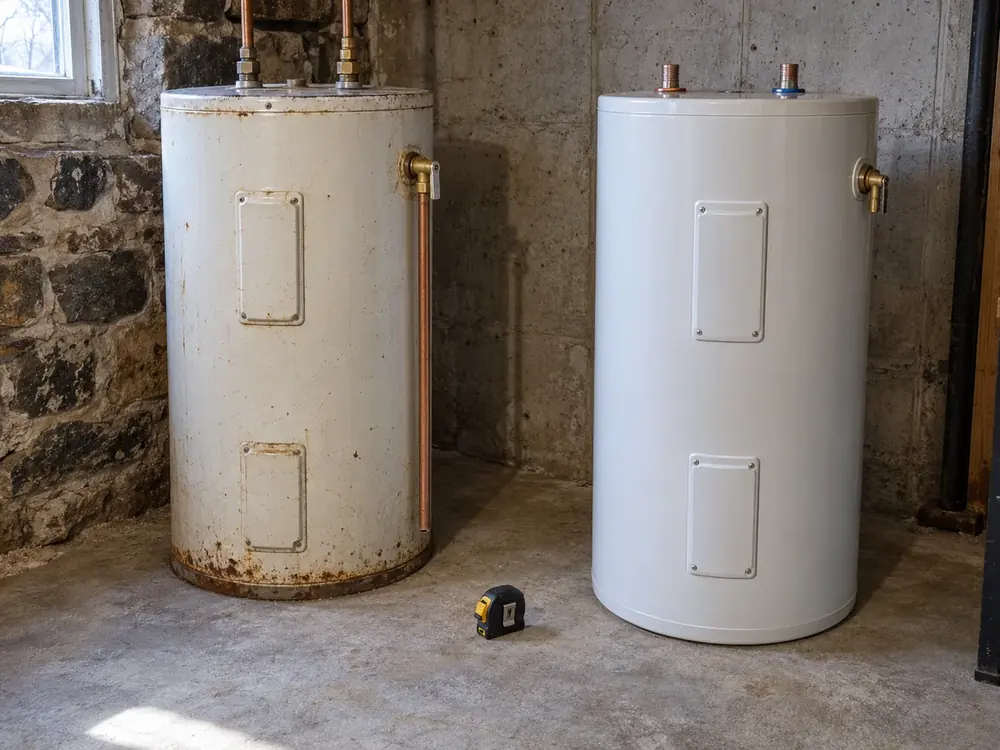
What Shapes a Water Heater Replacement Bill
Water heater replacement pricing reflects the equipment and the work needed to install it safely in the existing space. Call about a leak, unreliable hot water or a planned change in capacity. First, the person answering asks where the heater is, when the trouble began and whether the water is off. Share what you know during the conversation; your technician gathers the remaining details on the visit.
Start with the heater and household demand
The replacement type and hot water demand shape the equipment choice. A storage tank and a tankless unit require different installation planning. Your technician asks how many showers and appliances run together, then examines the current heater and its connections.
For a 50-gallon water heater, replacement cost includes more than the tank itself. The new unit's dimensions, recovery performance and fit with existing connections matter. When discussing replacement cost for a 40-gallon water heater, ask whether the proposed capacity matches current use. Keeping the same gallon capacity does not settle every sizing question.
The installed cost of a tankless water heater also includes the supporting changes needed for that model. Your technician identifies those changes in the scope, rather than treating the unit purchase as the whole installation.
Check fuel, connections and venting
Fuel type affects which connections and supporting systems the replacement needs. Gas, electric and oil-fired equipment present different work, especially when changing from the existing energy source. For an electric tankless water heater, cost also reflects any electrical work required for its demand.
Your technician examines the current venting where combustion equipment is involved. A different vent route, required clearance or condensate connection changes the job. Ask which existing components remain and which are replaced. An expansion tank or another required safety component belongs in the written scope when the proposed installation needs one.
Account for access, removal and permits
Access and removal add labor when a heater sits in a tight basement or closet. Your technician checks doorways, stairs, working space and the route for carrying out the old tank. Hauling and disposal should appear alongside the installation tasks so the scope covers the full replacement.
Hampton's official permit information lists plumbing work and mechanical work involving hot water heaters among work requiring a building permit. During the visit, ask how the required permit and inspection steps are included in the replacement plan. Permit needs belong in the work discussion; call now to start that discussion.
Review the scope before installation
A useful written scope identifies the proposed heater and every supporting task included in its price. Once the inspection is complete, your technician walks through the equipment, connections, venting changes, safety components, removal and permit arrangements before any replacement work starts.
Use a few direct questions during the call and visit:
- What does the inspection cover?
- Which installation changes accompany the new heater?
- Does the written scope include removal and disposal?
- How are additional findings discussed before extra work proceeds?
If a repair remains practical, ask how it compares with replacement; water heater repair involves a different scope. For the replacement itself, review the proposed work through the water heater replacement service.
Keep the installation record afterward
The written description and receipts record what was installed and what supporting work was completed. After installation, your technician checks operation and reviews the model's upkeep instructions. Keep the equipment details with those records so a future service call starts with the correct unit information.